Buying a residential lot in Citrus Springs can look simple at first glance. You find a parcel, check the price, and start picturing your future home or investment. But with vacant land, the real story is in the parcel details, utility access, flood and drainage conditions, and recorded documents. If you want to buy with confidence, you need to know what to check before you close. Let’s dive in.
Start With Parcel Research
When you buy land in Citrus Springs, the listing description should never be your only source of information. A better first step is to review the parcel itself through Citrus County’s GIS tools and the Citrus County Property Appraiser.
These county resources can help you confirm the exact parcel, acreage, roads, zoning layers, flood information, utility layers, and other parcel-specific notes. The GIS system may also show setbacks, bordering streets, topography, and whether you should check septic requirements with the Health Department if the lot is not on public sewer.
The Property Appraiser’s records are also useful for ownership details, assessment data, parcel maps, aerial views, building sketches, and sales history. That gives you a stronger fact base before you make an offer.
Why Parcel-Level Details Matter
Two lots in the same general area can have very different build conditions. One may have easier utility access, while another may involve flood-related costs, septic review, or special assessment questions.
That is why it helps to treat every Citrus Springs lot as its own case. Instead of assuming all lots are similar, you should verify the details on the exact parcel you want to buy.
Confirm Zoning and Recorded Limits
Before you write an offer, confirm the lot’s zoning and future land use. Citrus County’s GIS address lookup connects users to current zoning references and future land use information, which is important because not every parcel is regulated in exactly the same way.
For a residential lot purchase, your due diligence should also include checking the legal description, reading the recorded plat, and reviewing official records for any deed restrictions or easements. Those records can affect how the lot can be used or where improvements may be placed.
The Citrus County Clerk of Courts offers official records search tools and online plat maps by subdivision and other identifying information. These records can help you understand the lot beyond what a listing sheet may say.
Check the Buildable Area Early
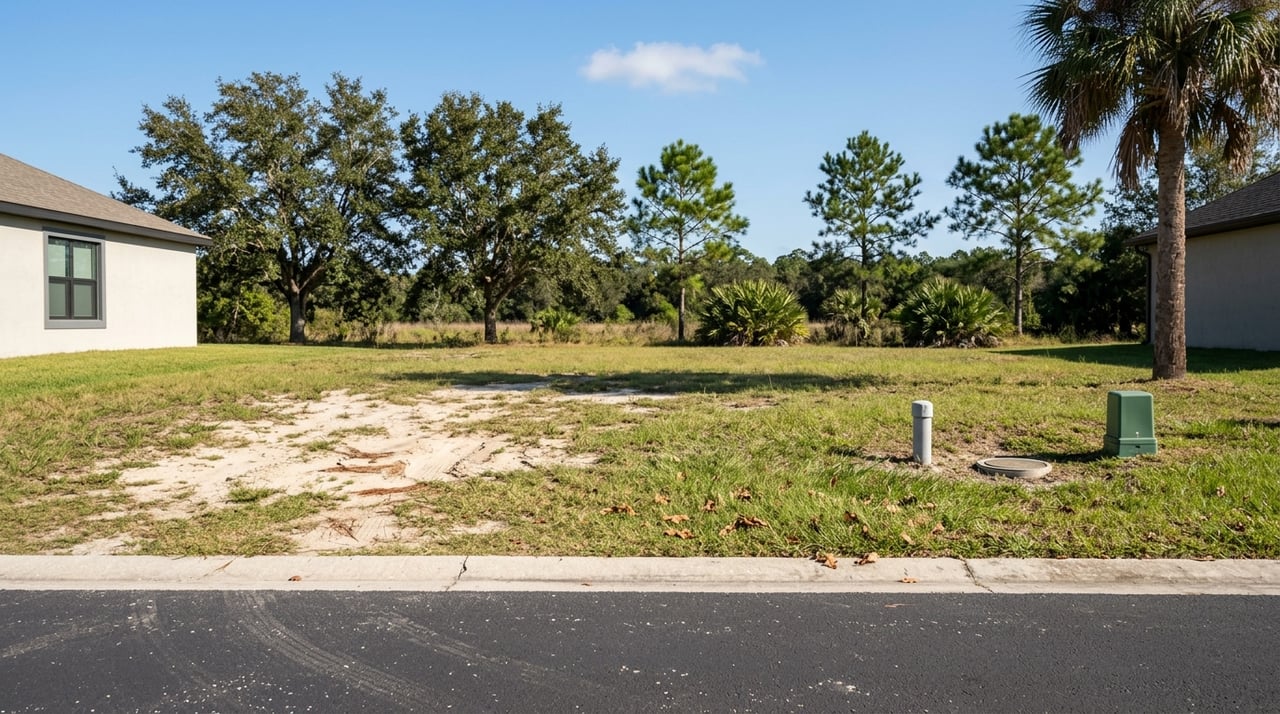
A lot may look usable on paper, but the actual buildable area can be smaller than expected. Corner lots, unusual shapes, easements, and setback requirements can all affect where a home, driveway, or other improvements may go.
County permit records show that site plans often need to be drawn to scale, and some submittals are denied when dimensions or improvements are not shown clearly. If the lot lines or buildable area are not obvious, bringing in a surveyor early can save time and help you avoid expensive surprises.
Treat Utilities as a Major Decision Point
One of the biggest mistakes land buyers make is assuming utility access will be easy. In Citrus Springs, water and sewer status can materially affect both cost and timing.
Citrus County’s Utility Business Services office handles water and sewer connections and billing for applicable properties. The county utility information also points buyers to parcel lookup tools and a resource for Water Line Assessments in Citrus Springs, which means you should review not only service availability but also whether any related assessment burden applies to the parcel.
Water and Sewer Questions To Ask
Before closing, it helps to confirm:
- Whether county water is available
- Whether public sewer is available
- Whether the parcel may need septic review instead
- Whether there are utility-related assessments tied to the lot
- Whether service paperwork may be needed before a building permit can move forward
County permit records show that utility reviewers may require an application for service before a building permit is issued. Those same records also show that some parcels may be required to connect to the county’s central water system, and in some cases may need to connect to central sewer within 365 days of notice if sewer service later becomes available. These comments are project-specific in permit files, so they should be reviewed as parcel-specific guidance rather than a blanket rule for every lot.
County permit comments also indicate that water meters may not be installed until a lot is cleared and staked. If you plan to build soon, that timing can matter.
Septic, Floodplain, and Drainage Can Change Costs Fast
If a Citrus Springs lot is not on public sewer, septic planning becomes part of your due diligence. The Florida Department of Health in Citrus County handles septic permitting and inspection under state oversight, and Citrus County’s GIS tool specifically directs buyers to check septic requirements with the Health Department when needed.
This is important because a lot that seems affordable at first can become more expensive if septic approval, site prep, or drainage work is more involved than expected. Buildability is about more than location alone.
Flood and Drainage Issues To Review
Floodplain and drainage conditions can directly affect construction planning and cost. County permit comments show that some flood-prone or environmentally sensitive sites may require a signed and sealed boundary and topographic survey with spot elevations, flood-hazard details, and FIRM panel references.
Permit records also show that erosion-control inspections may be the first inspection required before any ground disturbance begins. In practical terms, that means site conditions can affect your budget before vertical construction even starts.
Use Better Lot Comparables
Pricing vacant land is not as simple as comparing nearby addresses. A useful comp set for Citrus Springs should focus on parcels that are genuinely similar in the ways that matter most for buildability and value.
The Citrus County Property Appraiser provides property-transfer reports that can serve as a starting point for lot comps, although the office notes those reports are for assessment purposes only and should be verified with the Clerk. That makes them a helpful research tool, but not the final word.
What Makes a Good Lot Comp
When comparing residential lots in Citrus Springs, it helps to look at:
- Subdivision unit
- Lot size
- Road frontage
- Water and sewer status
- Flood zone
- Special assessments
- Any known build restrictions
A lot with public utilities and fewer site constraints may not compare well to one that needs septic review or more advanced site work. Using better comps can help you avoid overpaying for a parcel that will cost more to develop.
Know When To Bring In Professionals
With land purchases, timing matters. The right professional at the right stage can help you avoid delays and reduce uncertainty.
A surveyor is often the first specialist to consider when parcel boundaries, setbacks, flood elevations, or wetlands are unclear. County permit examples show that reviewers may request boundary or topographic surveys with spot elevations, flood-hazard details, and design-elevation information.
A builder or civil engineer may become important when a site needs stormwater planning, driveway layout work, utility tie-ins, or tree-retention planning. County permit records also show stormwater requirements, erosion inspections before land disturbance, and project conditions that can affect the path to construction.
A Smart Purchase Workflow
If you want a practical approach to buying a residential lot in Citrus Springs, follow a clear review process before closing.
Step-By-Step Lot Review
- Pull the parcel report through Citrus County GIS.
- Verify ownership, parcel data, and sales history through the Property Appraiser.
- Review the recorded plat, legal description, and official records through the Clerk.
- Confirm zoning, future land use, setbacks, and easements.
- Check water and sewer availability or confirm whether septic review will be needed.
- Review floodplain, drainage, and topographic concerns.
- Build a comp set using truly similar lots.
- Bring in a surveyor, builder, or engineer early if the parcel has any unclear conditions.
This kind of process gives you a fuller picture of what you are actually buying. It can also help you separate a good-value lot from a lot that only looks inexpensive at first glance.
Buying Citrus Springs Land With Confidence
Citrus Springs offers opportunity for buyers who want to build, invest, or hold land for the future. The key is to go beyond the listing and study the parcel from multiple angles, including zoning, recorded documents, utilities, septic needs, flood conditions, and comparable sales.
When you do that work up front, you put yourself in a stronger position to make a smart decision. If you want local guidance on evaluating lots in Citrus Springs and surrounding areas, connect with Tamara Myers for practical, informed support.
FAQs
What should you check before buying a residential lot in Citrus Springs?
- You should check the parcel report, zoning, future land use, recorded plat, easements, utility status, septic requirements if needed, flood information, and comparable lot sales.
How can you tell if a Citrus Springs lot is buildable?
- You need to review zoning, setbacks, flood zone, utility or septic status, drainage conditions, and recorded restrictions together because no single source gives the full answer on its own.
When should you hire a surveyor for a Citrus Springs lot?
- You should consider hiring a surveyor before closing if boundaries, lot shape, setbacks, or buildable area are unclear, and before permitting if elevation or flood details may be needed.
Do all residential lots in Citrus Springs have public water and sewer?
- No. Utility availability can vary by parcel, so you should confirm water and sewer status with Citrus County and review whether any utility-related assessments apply.
Can you build right away after buying a lot in Citrus Springs?
- Not always. Utility service paperwork, survey work, septic approvals, flood-related requirements, or other site conditions can affect how quickly you can move into the permit process.